The Emotional Impact of Amputation: Depression, Identity, and Support After Limb Loss
Amputation is not just a physical loss.
With amputation comes grief, body dysmorphia, and a changed identity. It can be hard to see your future or know what is possible in those early days. Many people say they were prepared for the physical loss, but not the emotional toll.
When you go through something so physical, whether it was a traumatic injury, a long battle with disease, or the amputation itself, your body shifts into survival mode. You follow the steps. You listen to your medical team. You focus on getting through.
Then those early phases pass, and you are left to figure out what moving forward actually looks like. It can feel like you made it over a huge hurdle, only to be met with emotions you were not prepared for.
This is often when depression and anxiety show up. There is structure for the physical side. You have physical therapy, occupational therapy, and prosthetic training. But emotionally, it can feel like there is no clear path.
The Many Losses That Don’t Get Talked About
We lose more than a limb with amputation.
We lose ease in daily tasks. Even getting out of bed can require effort and planning. We can lose independence, at least temporarily, and that shift is hard.
Our sense of identity can change too. So much of how we see ourselves is tied to what we do, how we move, and the roles we play in our families or careers.
Relationships can shift. The people around you are adjusting as well. And internally, there can be a loss of trust in your own body and abilities.
What the Research Actually Shows
Approximately one-third of individuals with limb loss experience clinically significant depression. This highlights a substantial and often underrecognized mental health burden within the amputee population.
Research has identified several factors associated with increased depression risk, including activity restriction, amputation-related body image disturbances, social discomfort, perceived vulnerability related to disability, and the use of avoidant coping strategies.
Protective factors include strong perceived social support and the use of more active coping strategies.
These findings reinforce the need for routine psychological screening and integrated mental health care throughout the recovery process, not just during the initial physical rehabilitation phase.
“Did We Ask the Right Questions?”
Many patients and families don’t know what to ask at first. Everything is new, fast, and overwhelming. You are given a lot of information, often before you have had the chance to process what is happening.
That is not a failure on your part. It is a lot to carry all at once.
This stage matters, but it is happening while you are still healing and adjusting. It makes sense if things feel unclear or even intimidating.
To take some of that pressure off, I put together a set of simple trackers and prompts you can lean on when your brain feels overloaded. Things like an insurance tracker, questions to bring to your prosthetic appointments, and tools to help you keep everything in one place.
You do not have to think of everything on your own. Sometimes it helps to have something that holds that mental load for you while you focus on getting through each step.
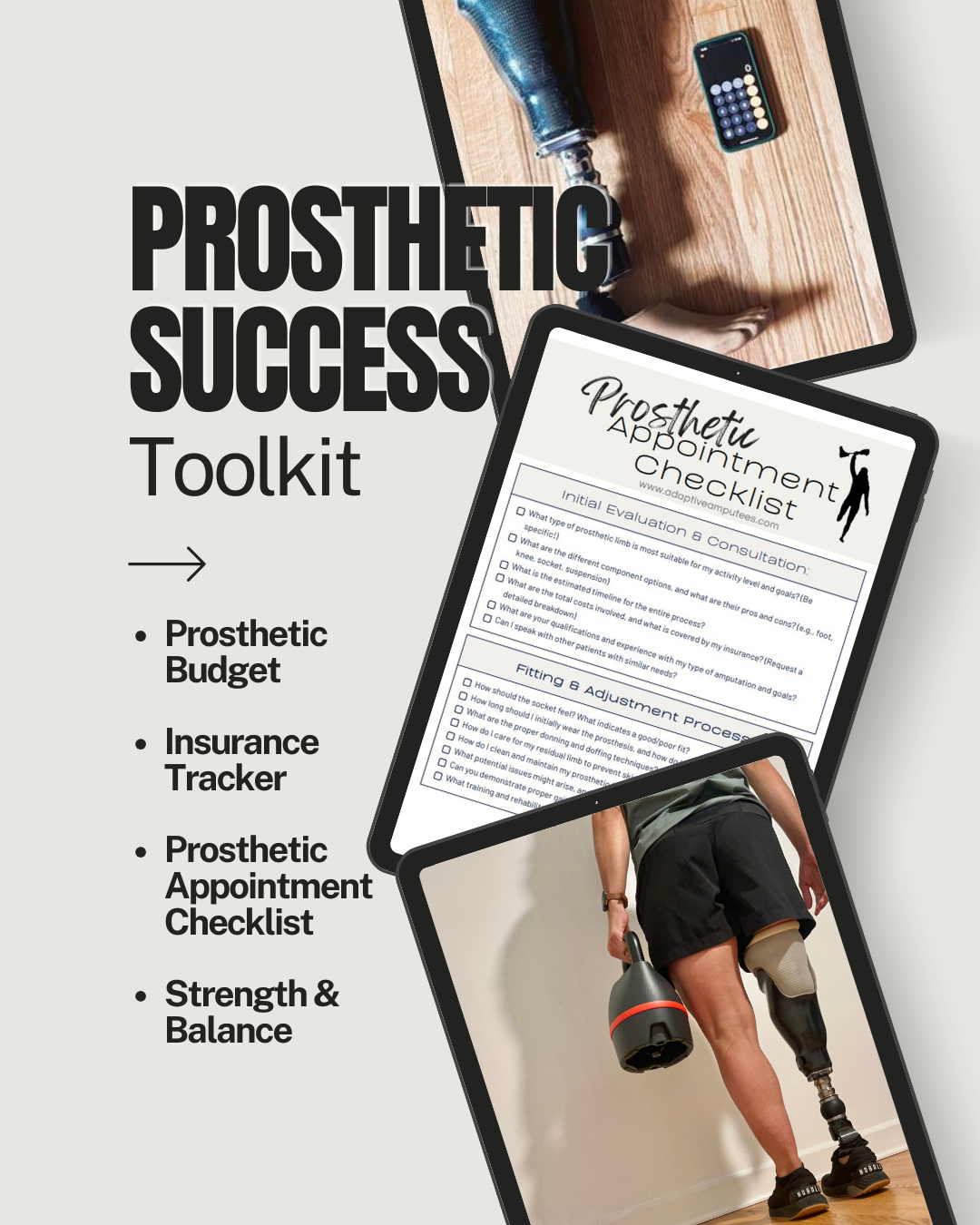
These are about managing the prosthetic process, appointments, and costs.
Items inluded
Prosthetic Budget Planner: Know the Real Cost of Your Prosthesis
Insurance Tracker
Prosthetic Appointment Checklist
Adaptive Workout Tips
Psychological Support: What Was Missing
Mental health support is often treated like something you add later, once the physical healing is done. But the emotional impact is happening at the same time.
For many people, therapy is not introduced early or framed as part of recovery. It becomes something you look for only when things feel overwhelming.
Trauma informed care matters. Whether your amputation was planned or sudden, your body and mind have both gone through something significant. The way providers communicate and support you emotionally makes a difference.
Access can also be a barrier. Not everyone has providers who understand limb loss, and there can be stigma around asking for help. It can feel like you should be handling it better, which keeps a lot of people silent.
The Medical Support Network Gap
Having a skilled care team matters, but not all teams are experienced in amputee life beyond healing and mobility.
There is often a focus on getting you closed up, fitted, and walking again. Living your life fully is a different conversation that does not always happen.
You might be progressing physically but still feel lost in your day to day life. Questions about work, relationships, and confidence do not always have a place in appointments.
Peer support can help fill that gap. Talking to someone who has lived it gives you a clearer picture of what is possible.
Advocating for yourself during this time is hard. You are learning, healing, and adjusting all at once. It is okay if you do not have all the answers yet.
Depression After Amputation
Depression does not always look like sadness.
It can feel like numbness, disconnection, irritability, or a lack of motivation. Sometimes it shows up as a quiet sense of hopelessness about your future, your independence, or your identity.
There can also be pressure to feel grateful. While that perspective can help, it can also make it harder to acknowledge real pain. You can be grateful and still be struggling.
If these feelings are not going away or are affecting your ability to function, it may be time to seek additional support. You do not have to wait until things get worse.
What I Wish More People Were Told Earlier
Emotional recovery is not linear. You can feel strong one day and overwhelmed the next.
You do not have to be positive all the time to be healing.
It is okay to grieve what you lost, even if your life has improved in other ways.
Your support needs will change over time. What helps early on may not be what you need later.
Moving Forward Without Minimizing the Past
Moving forward does not mean leaving everything behind. It means learning how to carry it differently.
For many people, this includes redefining identity. You may not be the same person you were before, and that can feel uncomfortable at first.
The right support meets you where you are, not where others think you should be.
There is space for both grief and growth.
Closing: You Were Not Unprepared, the System Was
So many people feel like they should have handled this better. Like they missed something.
In reality, the system prepares you for the physical and often leaves you to figure out the emotional side on your own.
This is not a personal failure.
Families and caregivers are navigating this too, often without guidance.
More open conversations can help. Sharing experiences and being honest about the hard parts creates space for others to feel less alone.
Take a moment to reflect on your own experience. What felt missing for you? What helped? Your perspective could be exactly what someone else needs to hear.