How to Clean Your Prosthetic Liner (And Why Everyone Has a Different Answer)
I asked a simple question on our Facebook page last week:
"How often do you clean your liner? And what do you use?"
300+ comments later, I realized two things. First, people feel strongly about this. Second, there is no one-size-fits-all answer… and that's actually okay!
Some people swore by rubbing alcohol. Others said rubbing alcohol would destroy their liner. Some wash theirs every single day. Someone else admitted they hadn't washed theirs in two weeks and had zero issues. One person uses a fancy ozone sanitizer system, while others use a wet wipe and called it a day. (Honestly, relatable.)
Here's one that got me: Bonnie P. has been an amputee since 1977 and washes hers with “whatever soap she's using in the shower, towel dries it, and puts it back on”. Twenty-eight people liked that comment. No fuss, no problems.
Then there was this gem from John C: "DONT PUT EM IN THE DISHWASHER OR WASHERS OR DRYERS." Many reactions to that comment haha.
The point is this community has decades of lived experience between them, and their answers vary wildly. So instead of pretending there's one right answer, let's talk through what actually matters, what the options are, and how to figure out what works for your skin and your liner.
Why Liner Cleaning Actually Matters
Your liner is in direct contact with your residual limb every. single. day. Sweat, skin oils, bacteria, and dead skin cells build up on the inside of the liner, the skin-contact side, every time you wear it. Over time, that buildup can cause odor, skin irritation, breakouts, and even infections.
The outside of the liner matters too, but it's the inside that really affects your skin health.
Here's the other piece: your residual limb's skin endures a lot. Pressure, friction, heat, and moisture. When skin is already under stress, introducing bacteria into the mix is how you end up with rashes, blisters, or open sores. Cleaning your liner consistently is one of the simplest things you can do to protect yourself.
How Often Should You Clean It?
Most prosthetists recommend daily cleaning. That tracks with what a lot of community members said too. Gayla H cleans hers every day, sometimes twice if she's been to the gym. Christine E washes hers daily and has a stand to let it dry while she wears the second one.
That said, life happens. Some people clean every other day, some every few days, and it works fine for them.
The honest answer: the more active you are and the more you sweat, the more often you should clean it.
If you're noticing odor, skin irritation, or buildup … your liner is telling you it needs more frequent cleaning.
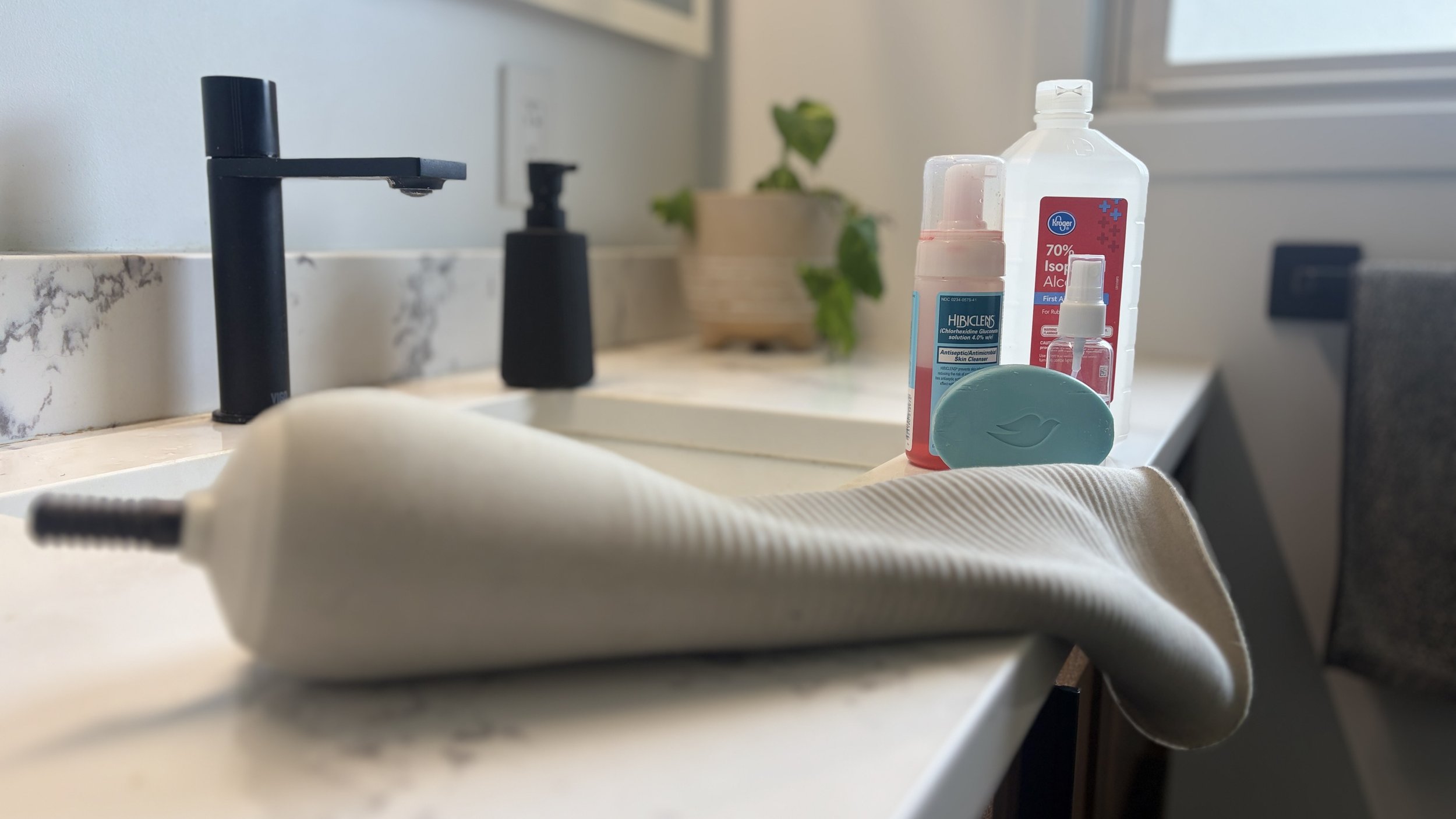
What to Use: Where Things Get Spicy
Okay, this is where the debate lives. Here's a breakdown of the most common approaches people use, along with what's worth knowing about each one.
Mild Soap and Water
This is probably the most universally recommended approach. Antibacterial or gentle fragrance-free soaps came up over and over: Dial, Dawn dish soap, Irish Spring, Johnson's baby shampoo, Ivory, Neutrogena. Several people mentioned their prosthetist specifically told them to use antibacterial soap.
Ann-Marie follows her prosthetist's advice (orange Dial soap), lets them air dry, and says her liners stay in great shape. Jalie M uses warm water and Ivory and keeps it simple, "nothing harsh."
The key with any soap is to rinse thoroughly. Soap residue left on the liner can irritate your skin just as much as the bacteria you were trying to get rid of.
I use Hibiclense. It was used on me in the burn unit. The nurses and doctors told me it is a powerful antiseptic used to clean wounds, remove dead skin, and prevent life-threatening infections.
Rubbing Alcohol / Isopropyl Alcohol
This one had the most passionate debate in the comments; and honestly, both sides have a point.
The case for it: Dana S has been squirting rubbing alcohol in the bottom and scrubbing with a washcloth for 18 years. Randy M uses 70% alcohol and has 47 years of experience. Evans C says his prosthetist specifically recommended 91% alcohol spray. Danny K has sprayed his with alcohol before putting it on for 4 years.
The case against it: Scotti T said: "Don't use rubbing alcohol. The alcohol will actually pit the material." Victoria D went a step further, saying washing your liner at all can strip the natural oils from your limb, and that she lets her liner get "seasoned" instead.
The reality? It likely depends on the type of liner you have. Alcohol can degrade certain liner materials over time, particularly softer silicone. If your prosthetist recommends against it, listen to them, they know your specific liner's material. If you've been using it for years without issue (like many people have), your liner may tolerate it fine.
When in doubt: check with your prosthetist about what's safe for your specific liner brand and material.
Specialty Prosthetic Cleaners
Madi O uses an Alps PH-balanced prosthetic cleanser, then puts her liners in a ROSS Ozone sanitizer system; and reports no odor issues since December. Michael B uses Amputee Essentials Resilience Prosthetic Cleanser, a pH-balanced, soap-free spray, and rotates between that and washing weekly in Dreft baby detergent.
These options are more involved (and pricier), but for people with sensitive skin or persistent skin issues, a pH-balanced cleanser designed for prosthetic materials can be worth it.
Wipes
Kelly K uses antibacterial wipes from Amazon for convenience and swears by a washcloth and Dial when she has more time. Lori H's fiancé's prosthetist actually recommended baby wipes or Dude wipes every night. Jeff D's entire method is a wet wipe.
Wipes are fast, easy, and work well as a daily maintenance tool between deeper washes. They're also great for travel or post-workout situations. Just make sure they're fragrance-free if your skin is sensitive.
I often do this right after a bike ride. That way I’m not sitting in a filthy liner on my drive home. Then when I shower I do my deeper liner wash.
How to Actually Clean Your Liner
Regardless of what product you use, the method matters too.
Turn the liner inside out so you can actually clean the skin-contact surface. Gently wash or wipe the inside, then rinse thoroughly if using soap. Pat dry with a clean towel, then let it air dry completely before wearing it again, which is why having two liners and rotating them is such a popular strategy.
Tony G washes the inside every time he showers and does a full cleaning every couple of weeks or after dirty outdoor work. That's a smart layered approach.
A few things to avoid:
Don't put your liner in the dishwasher, washing machine, or dryer. (Thanks, John.)
Avoid harsh scrubbing that could damage the material.
Don't use petroleum-based products; they can break down liner materials over time.
Don't skip the drying step. A damp liner can make sweat and friction worse, not better.
Take Care of Your Skin Too
Cleaning the liner is only half of the equation. What's happening on your residual limb matters just as much.
Check your skin daily! Look for redness, blistering, or unusual texture changes, especially in spots that get the most pressure. Catching irritation early means you can take a break before it turns into something more serious.
Moisturize, but time it right. Apply a fragrance-free, non-greasy moisturizer at night after cleaning. Not right before putting your prosthetic on, which can increase slipping and friction.
And if your liner just doesn't fit right lately, that's worth addressing. A changing residual limb is normal, and a poor fit causes more skin problems than almost anything else. A quick call to your prosthetist can save you a lot of discomfort.
I wrote a separate blog post on skin care here 👇
What If You Still Get Irritation?
Even with a solid routine, skin irritation happens. If you notice early redness or soreness, give your skin a break from the prosthetic when you can and let the area breathe. A mild healing ointment like aloe vera can help with minor irritation (check with your doctor before using hydrocortisone).
If things are getting worse instead of better (or if you see signs of open sores, persistent redness, or what looks like infection) see your healthcare provider. Don't wait it out. Early treatment is always easier than dealing with a bigger problem later.
The Takeaway
There's no single perfect answer to how to clean your liner. Your liner material, your activity level, your skin sensitivity, your climate; it all factors in. What works beautifully for someone with 47 years of experience may not be right for someone with sensitive skin.
What does matter: clean it consistently, let it dry fully, pay attention to your skin, and talk to your prosthetist if something doesn't feel right.
And if you've been doing it your own way for years with zero issues? You probably don't need to fix what isn't broken.
Overpriced Gimmick or High-Tech Game Changer?
Is a $600 ozone sanitizer actually worth it for amputees, or can good old-fashioned soap and warm water do the exact same job?
As part of our "Game-Changers vs. Overpriced Gimmicks" series, we took an honest, clinical look at the ROSS Rapid Ozone Sleeve Sanitizer. While you still have to do a quick manual pass with their chamois, the big question comes down to performance: Does an automated ozone sanitizing system deliver a deep enough clean to justify the steep price tag, or are you better off sticking to the sink?
If you've been eyeing this high-end device and wondering if it's a solid investment for your daily routine or just an unnecessary luxury, we tested it out so you don't have to guess.
What's your liner cleaning routine? Drop it in the comments! this community clearly has opinions, and I love it.
Affiliate Disclosure: This post contains affiliate links. If you purchase through these links, I may earn a small commission at no extra cost to you. I only recommend products I genuinely find helpful for the amputee community. Thank you for your support — it helps keep Adaptive Amputees going!