For many amputees, the bathroom is one of the most stressful rooms in the house. Wet surfaces, tight spaces and hard ceramic can turn a daily routine into something that feels risky and draining. On top of that, not everyone can afford or justify a full bathroom renovation, especially if the home was built long before limb loss was part of the picture.
The good news is that safety and comfort do not require a full gut job. Thoughtful setup, small adjustments, and planning ahead can make a huge difference.
This guide is for lower limb amputees, people with limb difference, and anyone adjusting to bathing with a disability. Whether you are newly adapting or looking to improve your setup, these strategies focus on safety, stability, and independence.
My First Experience With an Accessible Bathroom
I was born with a limb difference, so my parents knew from day one that accessibility mattered. When we moved into our house, my dad, who was a commercial plumber, modified the bathroom with long term use in mind.
That tub had three grab bars, each serving a different purpose. One was horizontal for steady support. One was angled at about 45 degrees, which made standing transitions feel more natural. One was vertical right where I stepped in and out of the tub. A shower bench was added so I could sit instead of balancing on one leg. The toilet was right next to the tub, which allowed me to transfer, dry off while seated, and move safely without feeling rushed.
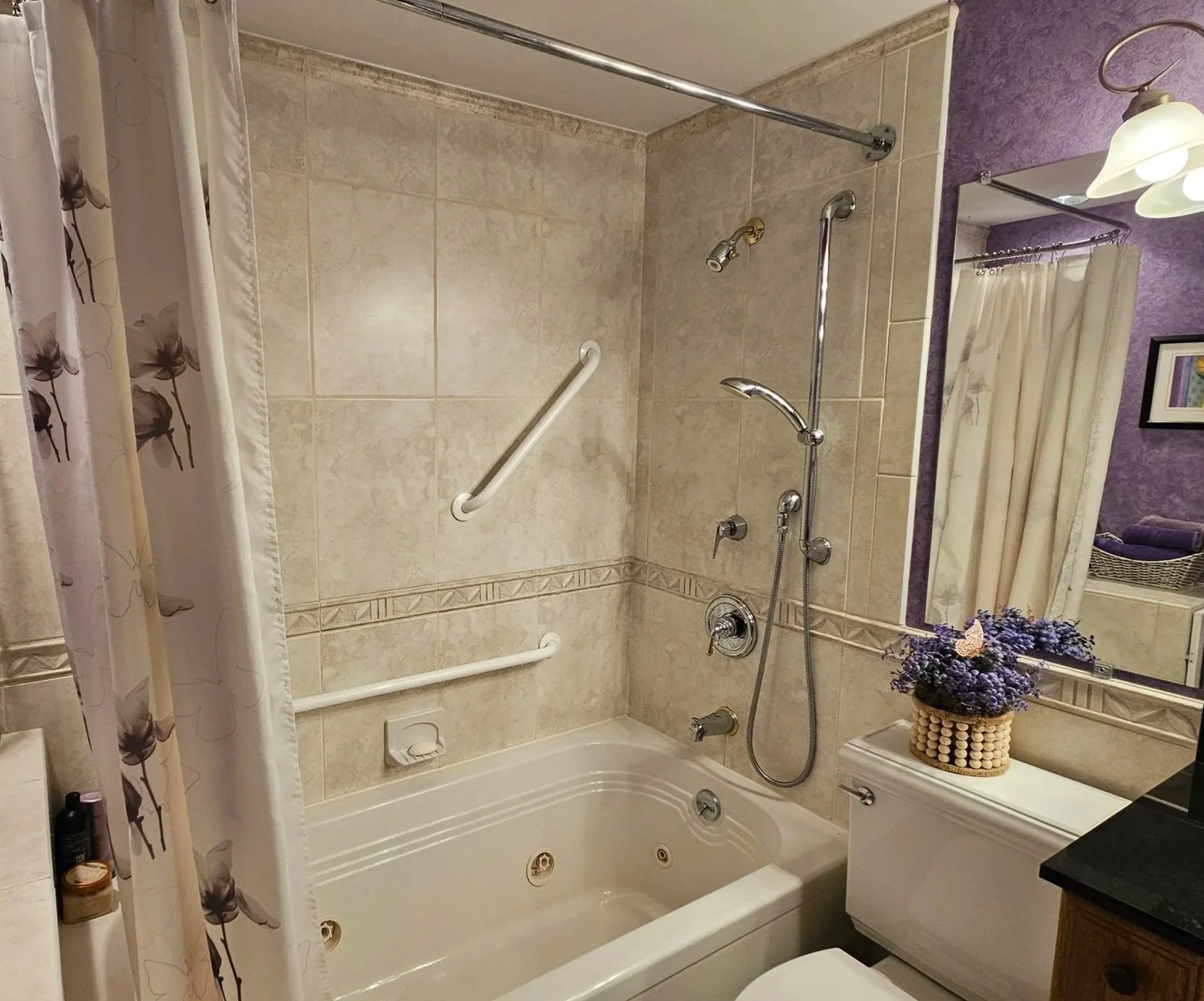
That early setup taught me that good bathroom design is less about expensive upgrades and more about thoughtful placement and function.
Adapting an Existing Bathroom After Amputation
In my current home, we only have one bathroom! When we renovated it ourselves, a walk in shower would have been amazing, but we also had to take into account resale value. We kept the tub and focused on making it safer without making it look “medical”.
Behind the tile, there is reinforcement in multiple spots so grab bars can be added later without opening walls. The built in shampoo shelf sits at a perfect height for me to hold onto for balance. The tub floor is nonslip. Outside the shower, our towel bars are actually grab bars rated to hold far more weight than I could ever put on them. Yes, I tested them.
Easy DIY Bathroom Safety Solutions for Amputees (No Tools Required)
These options are renter friendly and budget conscious. They are often the first step for people adjusting to a new body or a new home.
• Nonslip adhesive strips or decals for the tub or shower floor
• A removable nonslip bath mat that dries quickly
• A shower chair or bench with rubber feet
• Handheld shower head with a long hose
• Raised toilet seat if standing up is difficult
• Suction cup grab bars for temporary, light balance support (not for full body weight)
• Keeping toiletries within arm reach to avoid bending or twisting
None of these require drilling or construction, and many can move with you.
Moderate Bathroom Modifications to Improve Safety
If you can do a little more, these changes improve safety and confidence without a full renovation.
• Permanent grab bars anchored into studs or reinforced walls
• A tub transfer bench that extends outside the tub
• A comfort height toilet or toilet riser with arms
• Lever style faucet handles instead of knobs
• Textured or matte tile that reduces slipping
These upgrades are especially helpful for people who shower without their prosthesis or who have balance changes throughout the day.
Professional Bathroom Modifications for Long Term Accessibility
These options usually involve professionals and higher costs, but they can be life changing for long term independence.
• Walk in or roll in showers
• Curbless shower entries
• Built in benches
• Wall mounted toilets for easier transfers
• Professionally installed grab bars with custom placement
• Waterproof flooring throughout the bathroom
Even if these are not possible right now, knowing what exists helps with future planning.
Shower Safety Tips for Amputees While Traveling
Hotels, vacation rentals, and other people’s homes come with unknown setups. A little preparation goes a long way.
Many amputees travel with:
• A nonslip mat
• Suction cup grab bars
• A small towel to place on slick surfaces
When booking a hotel, always ask for an accessible room. Even if you do not use a wheelchair full time, accessible rooms often include grab bars, benches, and layouts that make showering safer. If an accessible room is not available, ask specific questions about the shower setup so you know what to expect.
When using someone else’s bathroom, take your time. Sit to dry off if needed. Use walls, counters, or sturdy fixtures for balance. It is okay to ask for a towel to place on the floor or to rearrange items temporarily.
Common Shower Safety Mistakes Amputees Make
• Relying on towel bars that are not weight rated (I installed a grab bar right outside the shower & disguised it as a towel bar).
• Standing on one leg on smooth surfaces without backup support
• Keeping items too low or too far away, forcing awkward reaching
• Assuming a setup is “safe enough” until a slip actually happens
Small adjustments early can prevent injuries later. I have been an amputee my entire life and have taken showers all over the world! Unfortunately not every bathroom has my safe at home setup and I have had some hard falls. Your body (and your pride) will thank you for anything you can do to prevent this.
Financial Assistance Programs
There are a few programs worth looking into that can help cover the cost of accessibility upgrades like walk-in showers:
• If you or your loved one is a veteran, the VA offers grants such as HISA or SAH that may help pay for home modifications, including accessible showers
• Medicaid Home and Community-Based Services (HCBS) waivers may cover bathroom modifications depending on income, location, and level of need
• The USDA Section 504 Home Repair Program provides grants and low-interest loans for low-income homeowners, especially in rural areas
• Nonprofits like Habitat for Humanity and Rebuilding Together sometimes assist with accessibility upgrades for older adults
A few steps that can help move things forward:
• Ask your doctor for a note stating that a walk-in shower is medically necessary for safety
• Contact your local Area Agency on Aging. They can often connect you with local grants and resources
• Get a few quotes from contractors. Some companies will help identify funding options or work with grant programs
Final Thoughts on Creating a Safer Shower Setup
Shower safety is not about doing everything perfectly. It is about reducing risk, conserving energy, and feeling confident in a space you use every day. Whether you add one nonslip mat or plan for future renovations, every small change counts.
The products linked in this post are examples of features and designs to look for. You do not need these exact items, but they can help you compare options and find what fits your needs.
Affiliate Disclosure
Some of the product links in this post may be affiliate links. That means Adaptive Amputees may earn a small commission if you choose to purchase through them, at no extra cost to you. I only recommend products and tools that I genuinely use, trust, or believe can help improve safety and independence for amputees.