How to Mentally and Physically Prepare to Return to Work After Time Off
There’s a particular mental spiral that can happen after amputation when you’re home with nowhere you need to be. Appointments might slow down, rehab isn’t as constant, and suddenly there’s a lot of empty time.
It’s common to want purpose again while also feeling completely stuck. You may miss feeling useful, independent, or part of something bigger, yet the idea of returning to work feels overwhelming. Motivation and exhaustion often exist at the same time after limb loss, and that can be confusing.
This in between phase is far more normal than people talk about. Many amputees experience this quiet, uncomfortable stretch before returning to work.
Why Going Back to Work Feels So Hard
The mental side
Going back to work often feels hard because routine and identity were disrupted all at once. Work used to provide structure, social connection, and a sense of who you were in the world. After amputation, that structure disappears, and it’s common to feel useless, behind, or disconnected from life as it once was. Even when you want to return, there can be a deep fear that you won’t be capable in the same way anymore.
There’s also the mental load of worrying how others will see you. Questions, stares, awkward silence, or unspoken expectations can create anxiety long before your first day back. That anticipation alone can be exhausting.
The physical side
Your body may still be catching up, even if your mind feels ready. Fatigue can hit faster than expected, stamina may be unpredictable, and pain or swelling can fluctuate day to day. Inconsistent mobility can make simple tasks feel uncertain, especially in environments that weren’t designed with amputees in mind.
The Mismatch Problem: When Your Mind Is Ready but Your Body Isn’t
For many amputees, motivation comes back long before physical capacity does. Mentally, you’re ready to move forward, to work, to feel normal again. Then your body taps out early, swells unexpectedly, or hurts in ways you didn’t anticipate. That gap between mental readiness and physical ability can feel discouraging.
This is often where frustration builds. You’re putting in effort, showing up, trying hard, yet progress feels slow or inconsistent.
What’s important to remember is that this isn’t a motivation problem or a lack of resilience. It’s a timing issue. Healing, adapting, and rebuilding stamina don’t follow the same timeline as mental readiness.
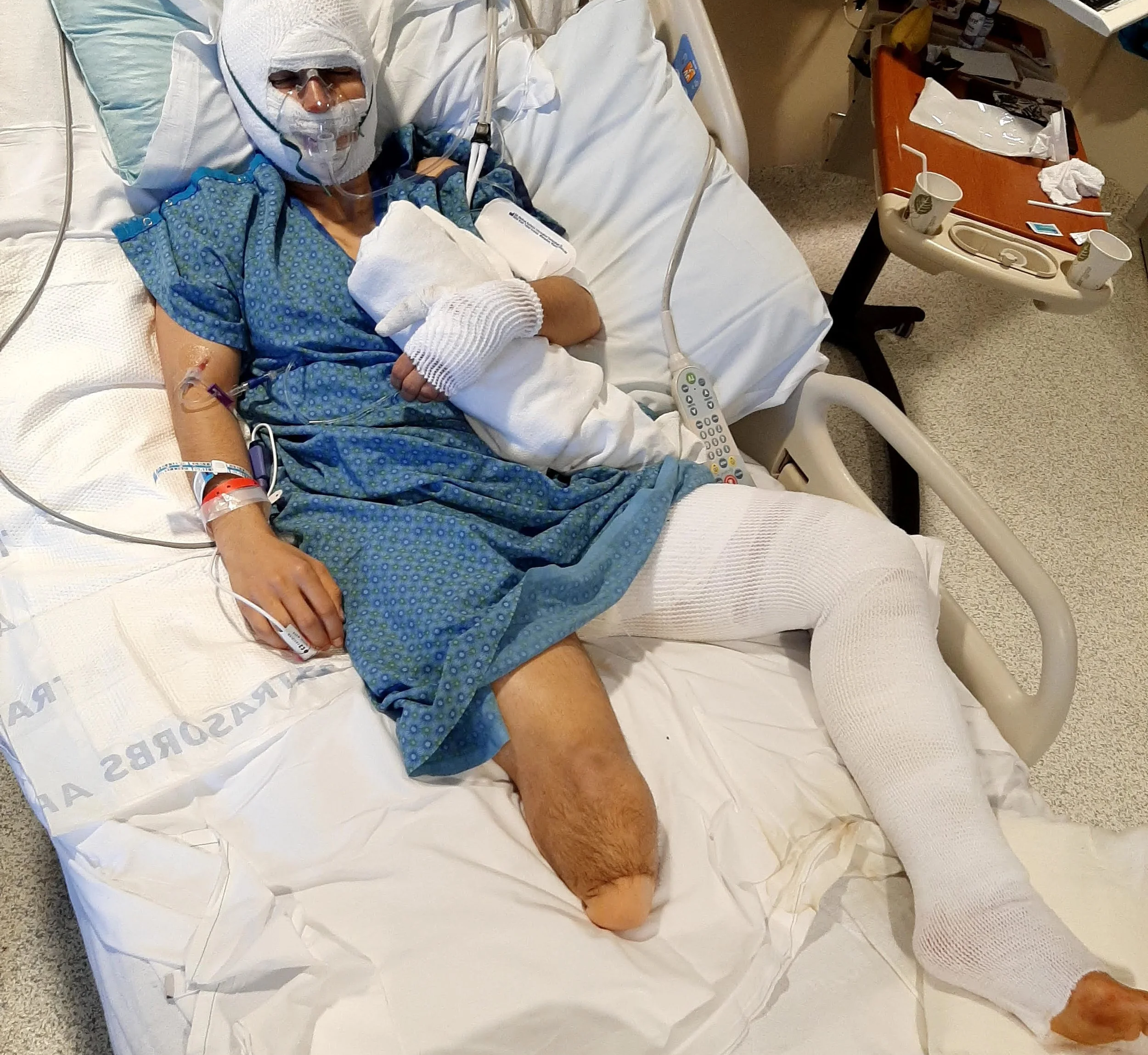
I cannot relate my amputation to this because I was only 4 and not working!
But I was in a kitchen fire in 2021 and had to go on disability. I was out of work and my days were spent trying to heal. So I will relate it to that recovery period - because I had serious cabin fever!
Step One: Rebuilding Structure Before Returning to Work
A consistent daily routine, including set sleep times, regular meals, and planned activities, creates predictability that helps manage stress, depression, and ADHD. It provides a sense of purpose and control.
Before returning to work start by
Setting wake times - don’t sleep in. try to cut back on those naps!
movement blocks - set reminders to move your body!
Doing something productive without tying it to income yet - when i was recovering from my burns (2021 kitchen fire) once i was healed enough i started doing chores around the house and it honestly helped my mood. I felt like i was contributing again. It took me a lot longer to fold a load a laundry & I had to have my husband get it out of the dryer and carry the basket to the bedroom for me. But it was a start!
Step Two: Rebuilding Physical Capacity Without Burning Out
Gradually increasing time on your feet, sitting tolerance, or task load
Practicing work specific movements in low stakes environments - replicate tasks you complete in a work day! If you sit at a computer block some time into your day sitting at a desk.
Rest as a strategy, not a reward - this is very important!
Step Three: Addressing the Fear of Going Back
Fear of judgment, failure, or needing accommodations
Letting go of the idea of returning at 100 percent
Permission to return differently than before
Step Four: Planning a Realistic Return
Phased or part time returns - I had to do this! I was SO ready to return but after my first day I felt awful. I realized I needed to come back part time because my stamina was so low. I work from home and sit at a desk and even then I needed part time.
Conversations with employers or HR - I had lots of “check-ins” with my boss and with HR. Letting them know how I was feeling and what I needed to be successful.
Advocating for accommodations without guilt - This was tough. I felt like my company had been so “good” to me while I was out. I wanted to come back all at once, but realized I wouldn’t be successful that way.
When You Are Mentally Done Being Home but Not Ready for Work
Alternative ways to regain purpose - I mentioned earlier house chores! Something else I did was facetime my nieces every day! We had daily check-ins. It was really nice getting to be a part of their routine. I also learned how to bake sourdough! This was a major fear to address. the scary kitchen.
Volunteering, short projects, learning, or low pressure commitments - I read the most amount of books I have ever read in one year!
Staying engaged without pushing too far - I did all of those things, but I took a Lot of breaks! I napped a lot!
You Are Not Broken, You Are Transitioning
This phase can feel endless when you’re living it, but it isn’t permanent. The space between time off and returning to work is often the hardest part, and it’s rarely talked about. That doesn’t mean you’re stuck. It means you’re in transition.
Progress after amputation is not linear. Some days your mind is ready and your body isn’t. Other days it’s the opposite. Neither erases the progress you’ve already made.
Take a moment to notice where you feel most stuck right now. Is it physical stamina, confidence, fear, or pressure you’re putting on yourself? Naming it matters.
Be patient with yourself without putting your life on hold. You can move forward and offer yourself compassion at the same time. You’re not broken. You’re adapting, and that takes time.
What is your biggest barrier for returning to work?